
🟠 Introduction
If you’re a property manager in London, you’ve likely seen rope access technicians working on facades, glazing, or gutters — but what exactly is rope access?
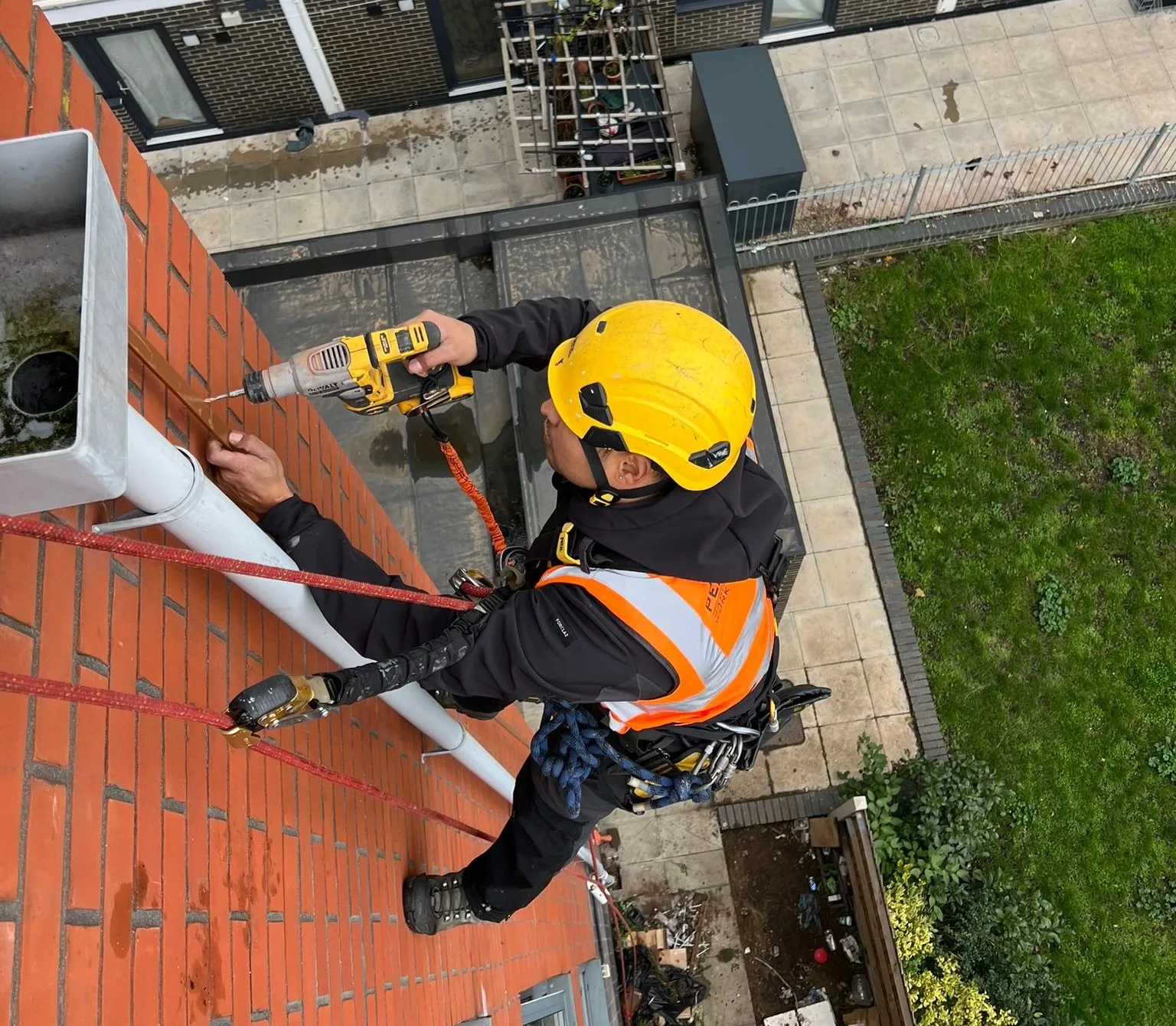
This isn’t rock climbing on the side of a building. Rope access is a highly regulated, professional method of accessing difficult areas at height using dual rope systems and certified techniques.
Here’s what you need to know — from how it works to when it’s the best solution.
🧗♂️ What Is Rope Access?
Rope access is a method of working at height where technicians use two independently anchored ropes:
-
A main working line
-
A backup safety line
This dual system allows for safe vertical and horizontal movement on the exterior (or interior) of a building — with no need for scaffolding, cradles, or heavy machinery.
It’s used across London for:
-
Gutter cleaning
-
Facade repairs
-
Window and glazing maintenance
-
Painting and decorating
-
Leak detection
-
Bird proofing
-
Survey and inspection work
✅ How Safe Is It?
Rope access is one of the safest access methods in the world — with a better safety record than scaffolding and MEWPs.
Why?
-
All technicians must be IRATA-certified (International Rope Access Trade Association)
-
Two-rope systems ensure redundancy
-
Equipment is inspected before every use
-
Rescue plans are mandatory for every project
-
Minimal ground disruption reduces risk to the public
At Peak Access, our teams include only IRATA Level 2 and 3 technicians, and all RAMS are independently reviewed.
🏙️ When Should You Use It?
Rope access is ideal when:
-
You need to access a specific area at height
-
You want to avoid scaffolding (cost, disruption, permits)
-
The site is tight, complex, or busy (city centres, courtyards, internal voids)
-
You’re doing short-term or reactive works
-
You need to act fast — we can be set up in under an hour
Common London use cases include:
-
Residential blocks with no scaffold allowance
-
Commercial buildings with active tenants
-
Retail or hotel properties that need discrete maintenance
🧯 What Rope Access Can’t Do
It’s not the solution for everything.
Avoid rope access if:
-
You need long-term access to large surface areas (e.g. full facade renovation)
-
You’re carrying out structural works that require platforms or storage
-
No certified anchor points or rigging options exist
In those cases, MEWPs or scaffolding may be better — and we’ll always advise honestly based on access, safety, and budget.
✅ Final Thoughts
Rope access is fast, flexible, and extremely safe — making it the go-to choice for many building maintenance tasks in London.
Whether you manage one block or an entire portfolio, knowing when to use rope access helps you make faster, smarter, and more cost-effective decisions.
📞 Want to know if rope access is right for your building?
Send us photos or a description — we’ll give honest advice and a fast quote.